
The Mercedes-AMG G63 is arguably the most recognizable SUV on Dubai’s roads, and since the current W464 generation introduced an independent front suspension with AIRMATIC air suspension as standard, it rides dramatically better than the old solid-axle G-Wagon but it also inherited a genuinely complex air suspension system that comes with its own set of known failure points.
What Is AIRMATIC?
AIRMATIC is Mercedes-Benz’s air suspension system, using air-filled struts at each corner instead of traditional steel springs, controlled by a compressor, valve block, and ride-height sensors to automatically adjust for load and driving conditions. On the G63, it’s paired with adaptive damping to deliver both off-road capability and on-road comfort from the same vehicle a genuinely impressive engineering feat, but one with more components that can fail than a simpler spring-based system.
Common G63 AIRMATIC Symptoms
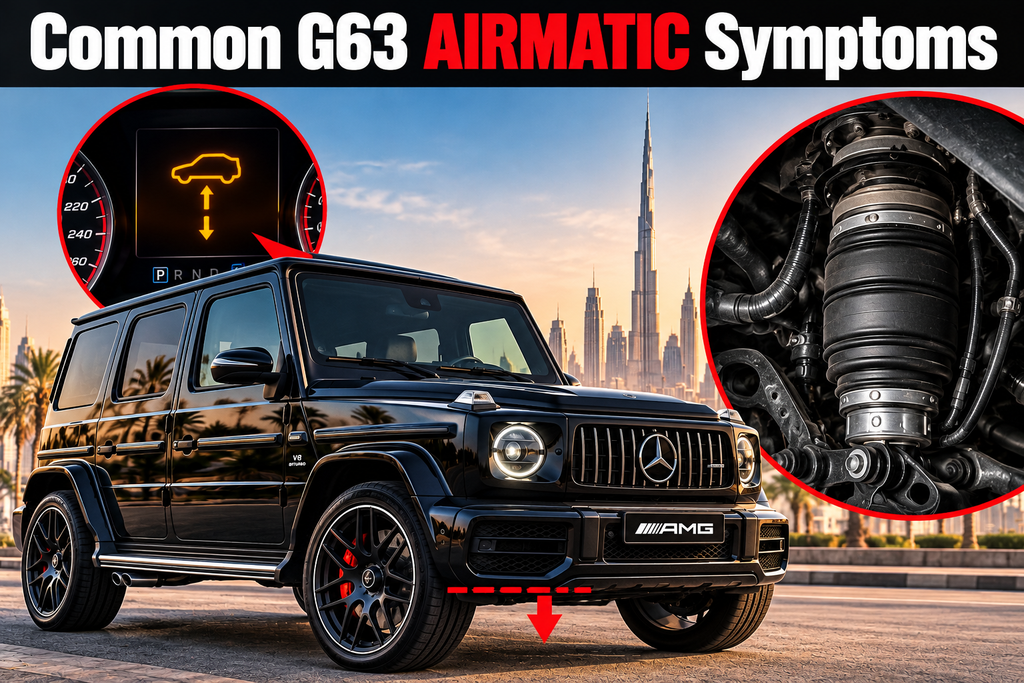
- Vehicle sagging on one or more corners, especially noticeable after sitting parked overnight
- “Suspension Fault” or “ENG Visit Workshop” warning messages related to the air suspension system
- Compressor running excessively or making a loud, straining noise when trying to adjust ride height
- Hissing sound from around the wheel wells, typically indicating an air strut or line leak
- Uneven ride height side-to-side, visible on level ground
- Harsh or unusually stiff ride, sometimes a sign the system has defaulted to a fixed fallback height after detecting a fault
- Vehicle failing to lift to its normal ride height even after extended compressor run time
Why This Happens
- Air strut seal degradation — the rubber and fabric-reinforced air struts lose their airtight seal over time as the material ages, particularly accelerated by heat
- Compressor wear — the compressor works harder as struts slowly lose air, shortening its own lifespan in a compounding cycle
- Valve block or solenoid failure — the valve block directs air to each corner individually, and internal wear here can cause uneven height or failure to adjust properly
- Height sensor faults — a faulty sensor can report incorrect ride height data, causing the system to overcorrect or fail to level properly
Why This Is Especially Relevant in Dubai
The G63 is driven extensively in exactly the conditions that stress AIRMATIC the most: sustained extreme heat that degrades rubber air strut seals faster, frequent desert and off-road use that adds mechanical stress to the suspension components, and long periods parked in direct sun that accelerate thermal aging of seals and air lines. This combination means UAE-driven G63s can show AIRMATIC symptoms notably earlier than the same vehicle would in a cooler, less demanding climate.
Diagnosing an AIRMATIC Fault Properly
- Full suspension system fault code scan to identify which specific component (strut, compressor, valve block, sensor) is flagged
- Visual and pressure inspection of each air strut to check for slow leaks versus a sudden failure
- Compressor function test under load to assess whether it’s still operating within normal parameters
- Ride height sensor calibration check, since a miscalibrated sensor can mimic symptoms of a mechanical fault
Repair Options
| Fault Confirmed | Typical Fix |
|---|---|
| Air strut leak | Individual strut replacement (per corner) |
| Failing compressor | Compressor replacement |
| Valve block/solenoid fault | Valve block repair or replacement |
| Faulty height sensor | Sensor replacement and system recalibration |
A single strut replacement is far less invasive and costly than a full system overhaul, which is why an accurate, component-level diagnosis matters a competent workshop should be able to tell you exactly which part has failed rather than defaulting to a blanket “suspension system” quote.
Preventive Tips for G63 Owners
- Park in shade or covered parking whenever possible to reduce thermal stress on air struts
- Don’t ignore a hissing sound it’s almost always a cheap fix if caught early, and an expensive compressor replacement if left to run for months
- Have the suspension system checked at every major service, particularly before and after peak summer
- If used regularly for off-road or desert driving, factor in more frequent suspension inspections given the added mechanical stress
FAQ
Is AIRMATIC failure common on the Mercedes G63? It’s a well-documented characteristic of air suspension systems generally, and the combination of Dubai’s heat and the G63’s frequent off-road use makes it more likely to appear earlier than average.
Can I convert my G63 from AIRMATIC to coil springs to avoid future issues? Conversion kits exist for some Mercedes models, but they alter the vehicle’s factory ride and handling characteristics significantly and aren’t a decision to make without fully understanding the trade-offs most owners choose to properly repair and maintain the factory system instead.
Is it safe to keep driving with a suspension warning light on? The system typically defaults to a fixed fallback height to protect itself, which allows continued driving at reduced comfort, but the underlying fault should be inspected promptly since continuing to run a leaking strut accelerates compressor wear.
How long does AIRMATIC repair typically take? A single strut or compressor replacement usually takes half a day to a full day depending on parts availability and the specific fault.
Hearing a hiss, feeling a sag, or seeing a suspension warning on your G63? Call Auto Doctor or WhatsApp us for a full AIRMATIC diagnostic.